
Table of Contents
Key Engineering Takeaways
Summary of algorithmic improvements and compatibility benchmarks introduced in the latest release.
- Automated table address resolution eliminates manual offset tracking across 1,364 engine and transmission control modules.
- Strict compliance verification maintains binary integrity and continuous CRC32 and RSA cryptographic checksum validation.
- Seamless integration with SAE J1979-2 and DoIP diagnostic interfaces for zero-latency parameter verification.
Architectural Overview & Control Coverage
Expanding an automated calibration database requires rigorous parsing of complex memory layouts across diverse microcontroller families, including Infineon TriCore, Aurix TC3xx, and Renesas RH850 platforms. CalibrationBot parses raw flash binaries to identify map boundaries, scaling coefficients, and reference axes without requiring manual symbol file generation. This systematic approach allows technicians to analyze sensor curves, timing advance limits, and target boost pressure parameters across 1,364 distinct controller variants with repeatable precision.
In high-throughput diagnostic environments, manual identification of calibration parameters introduces risks of offset miscalculations. The updated engine solves this through automated pattern matching algorithms that correlate table structural signatures against known OEM base maps. The system categorizes each table into standardized dimensional matrices, allowing analysts to compare parameter shifts across production model years seamlessly.
Real-Time Telemetry Mapping & Validation
Modern vehicle control units demand rigorous verification before any altered parameters are accepted by on-board bootloaders. CalibrationBot incorporates automated signature verification and multi-block CRC calculation, securing binary consistency prior to test-bench deployment.
When verifying automated map corrections, always perform live diagnostic polling over CAN FD or DoIP channels to confirm that active sensor feedback matches recalculated target table matrices.
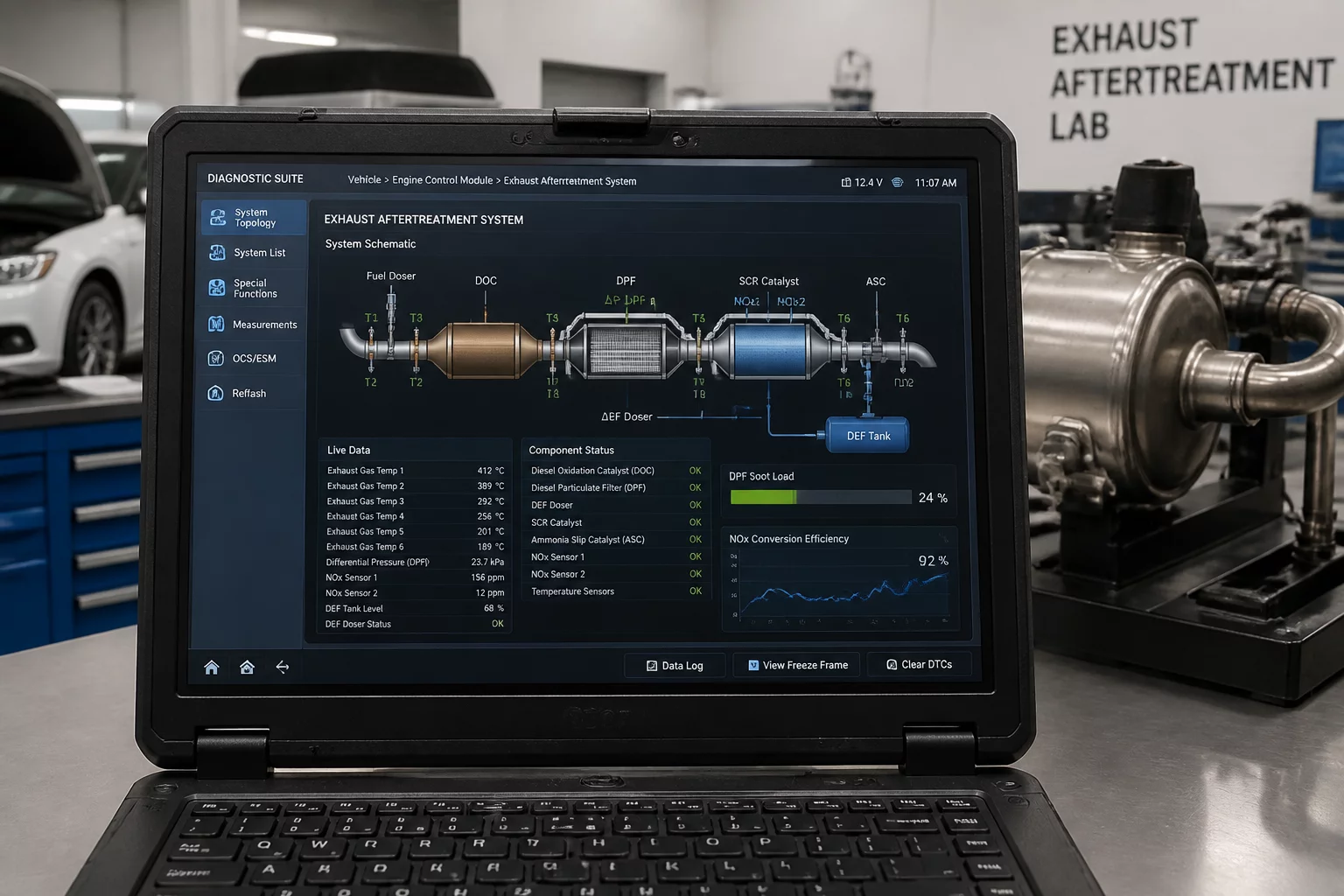
By pairing automated map identification with live data logger integration, the software provides closed-loop verification. Diagnostic specialists can cross-examine real-time fuel trim logs, mass airflow signals, and exhaust gas temperatures directly against calculated table values, confirming that control algorithms operate within defined OEM safety margins.
Hardware & Protocol Specifications
The table below outlines core performance criteria, protocol standards, and verification parameters implemented across the updated database release:
| Parameter | Diagnostic Specification | Verification Standard |
|---|---|---|
| Total Model Profiles | 1,364 Verified Control Units | ISO 14229 / UDS Standard |
| Processor Family Support | TriCore TC2xx/TC3xx, RH850, PowerPC | Automotive Safety Integrity Level B/D |
| Checksum Calculation Speed | < 120 ms per 8MB Flash Image | CRC32 & Hardware Hash Protocols |
| Bus Interface Compatibility | CAN 2.0B, CAN FD, Ethernet DoIP | SAE J1979 / SAE J1979-2 (OBD-on-UDS) |
Leo
Lead Diagnostic SpecialistHuge database expansion.