Table of Contents
Primary Release Takeaways
The Autocom 2026.05 update removes hardware tethering constraints during test drives, ensuring clean data capture for hard-to-reproduce intermittent faults.
- Internal non-volatile flash storage records up to 16 continuous hours of multi-PID vehicle streams without host communication.
- Hardware marker button on the VCI allows the driver to flag anomalous mechanical or electrical sensations with 30-second pre-trigger memory retention.
- Synchronized multi-ECU polling ensures simultaneous inspection of transmission slip ratios, rail pressure drops, and boost deviations.
Flight Recorder Architecture and Memory Layout
Diagnostic field evaluations often fail when intermittent glitches refuse to manifest while stationary on a workshop lift. In release 2026.05, Autocom integrates the dedicated Flight Recorder engine directly into the Vehicle Communication Interface (VCI) firmware. Technicians compile custom sensor profiles in the desktop suite, select target controller nodes such as the ECM, TCM, or ABS modules, and flash the recording script directly to the device micro-controller.
Once plugged into the vehicle OBD port, the interface runs independently of Bluetooth or USB host connections. The internal firmware continuously interrogates the specified CAN FD, standard high-speed CAN, or DoIP gateway channels. Incoming frame buffers are written cyclically to onboard storage, ensuring that high sample frequencies do not suffer packet loss or latency jitter during aggressive acceleration or emergency braking cycles.
Autonomous Triggering and High-Bandwidth Telemetry
Diagnosing sporadic misfires or transient high-pressure fuel dips requires high-precision time resolution around the exact fault moment. Autocom 2026.05 introduces an automated dual-trigger mechanism. In addition to a physical button on the VCI enclosure that the driver presses when a symptom occurs, the firmware monitors live PID thresholds. If fuel trim exceeds plus-twenty percent or knock sensor voltage crosses calibration boundaries, the Flight Recorder initiates an automatic high-speed burst.
When configuring parameter tables for multi-gateway vehicles, limit simultaneous high-speed queries to 12 critical PIDs per bus segment. This prevents gateway buffer congestion and guarantees consistent 100 to 200 Hz resolution across essential dynamic sensors.
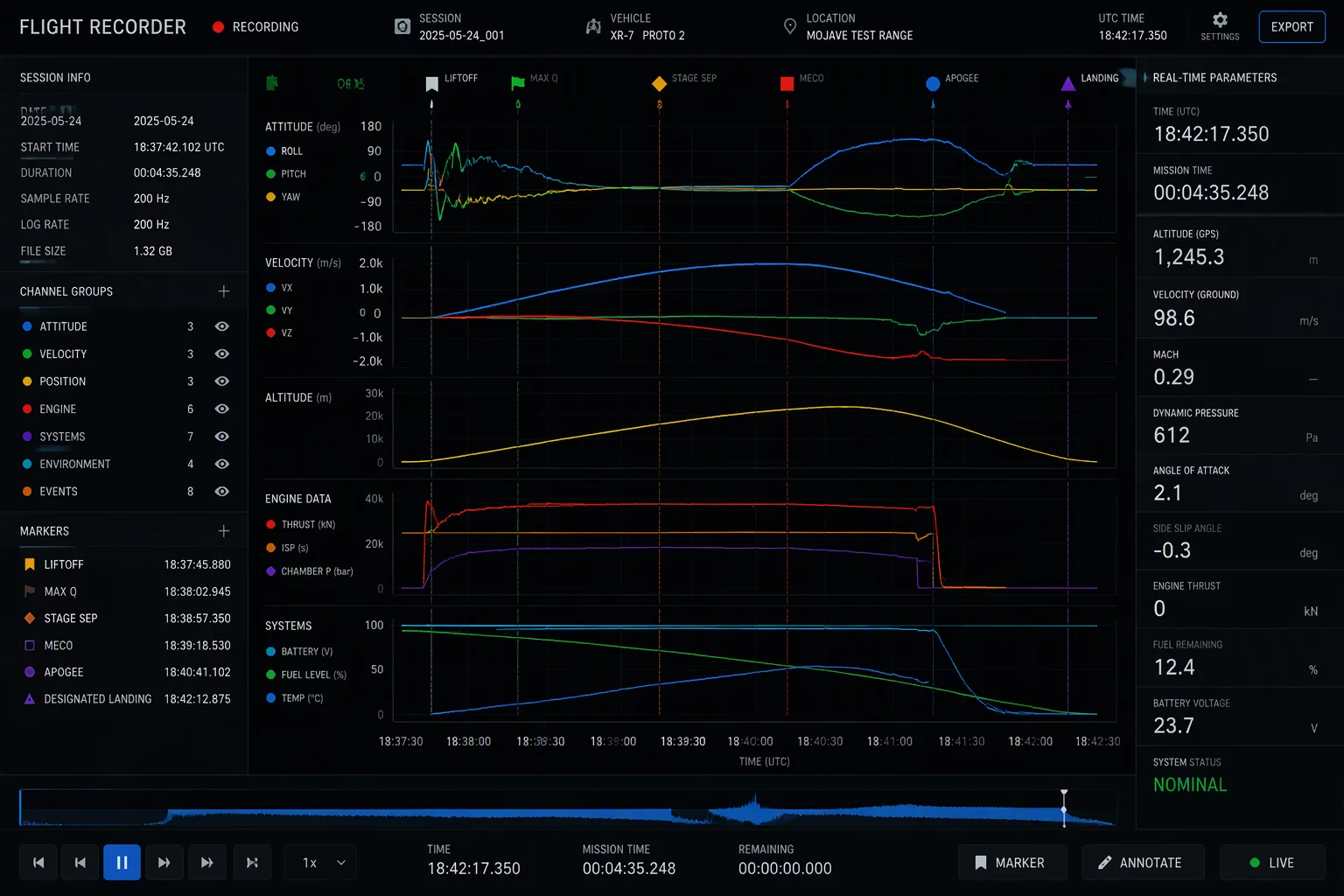
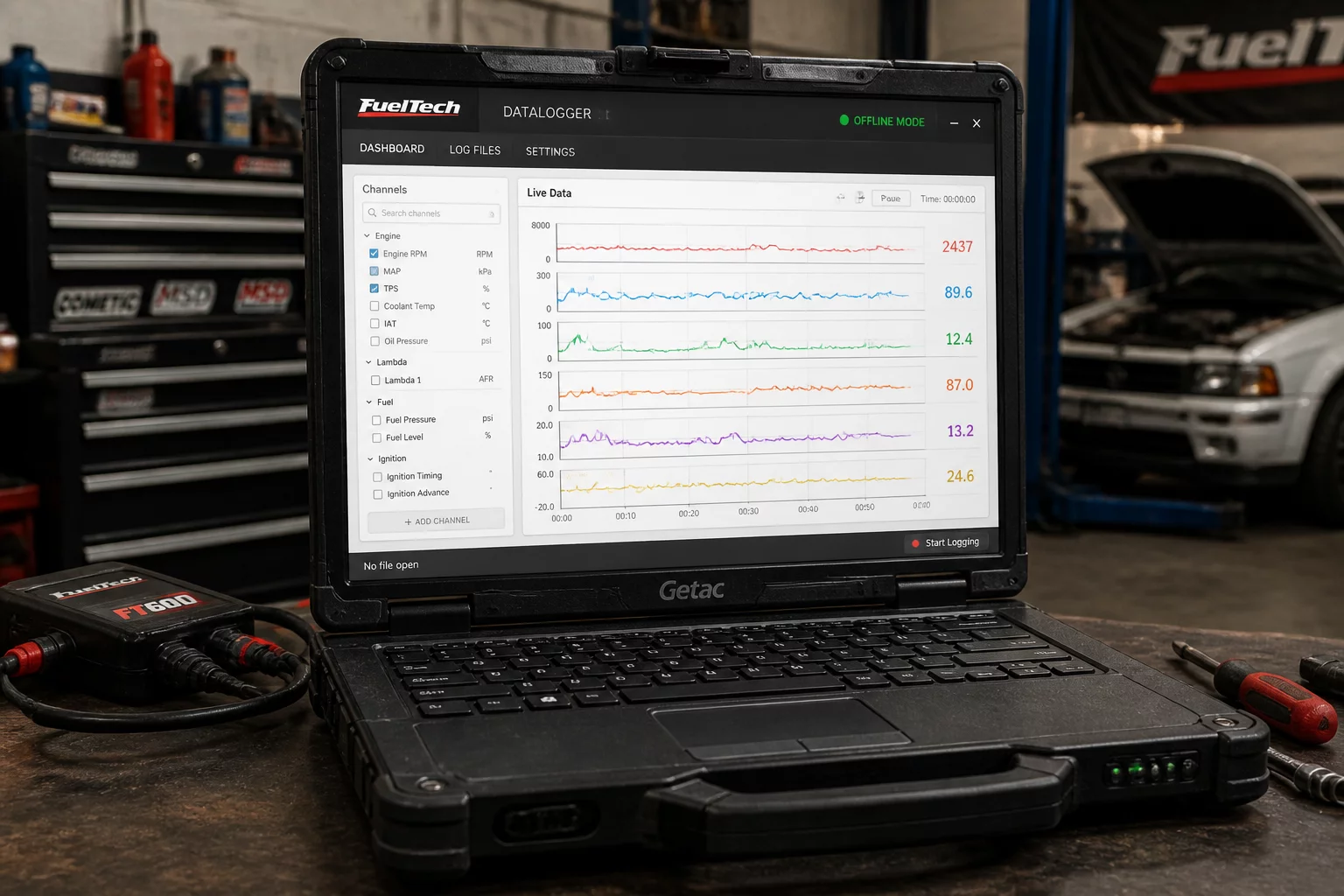
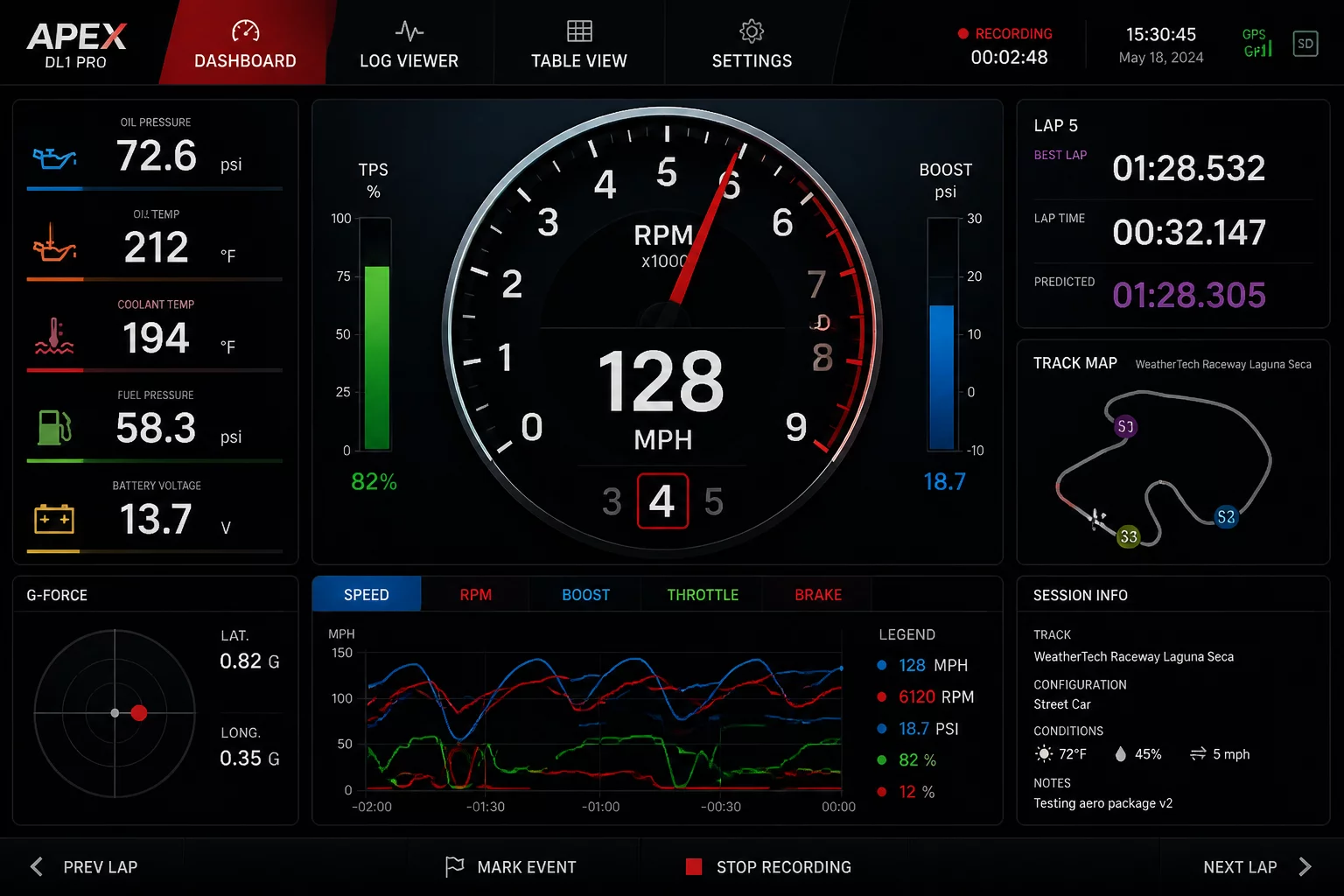
Upon completing the test drive, the VCI connects back to the diagnostic terminal where the Autocom suite extracts the raw binary log. The integrated visualizer plots multi-channel graphs, aligns event markers against stored freeze-frame snapshots, and enables technicians to export standard CSV or MDF4 formats for comparison against known-good reference profiles.
Operational Parameters and Protocol Matrix
The table below summarizes the technical specifications, communication channels, and buffer management metrics established in the Autocom 2026.05 Flight Recorder release.
| Parameter | Diagnostic Specification | Verification Standard |
|---|---|---|
| Maximum Parameter Channels | Up to 24 simultaneous live PIDs per recording profile | SAE J1979-2 & UDS ISO 14229 |
| Sampling Resolution Range | 10 Hz baseline up to 200 Hz burst mode | ISO 11898-1 CAN FD Specification |
| Pre-Trigger Buffer Retention | 30 seconds continuous pre-event ring buffer | Firmware v2026.05 Internal RAM Buffer |
| Data Export Compatibility | Native Autocom Log, MDF4, CSV, and Vector ASC | ASAM MDF4 Telemetry Standard |
No comments yet. Be the first to leave a comment.