Eliminating Physical VCIs in Modern Automotive Ethernet Testing
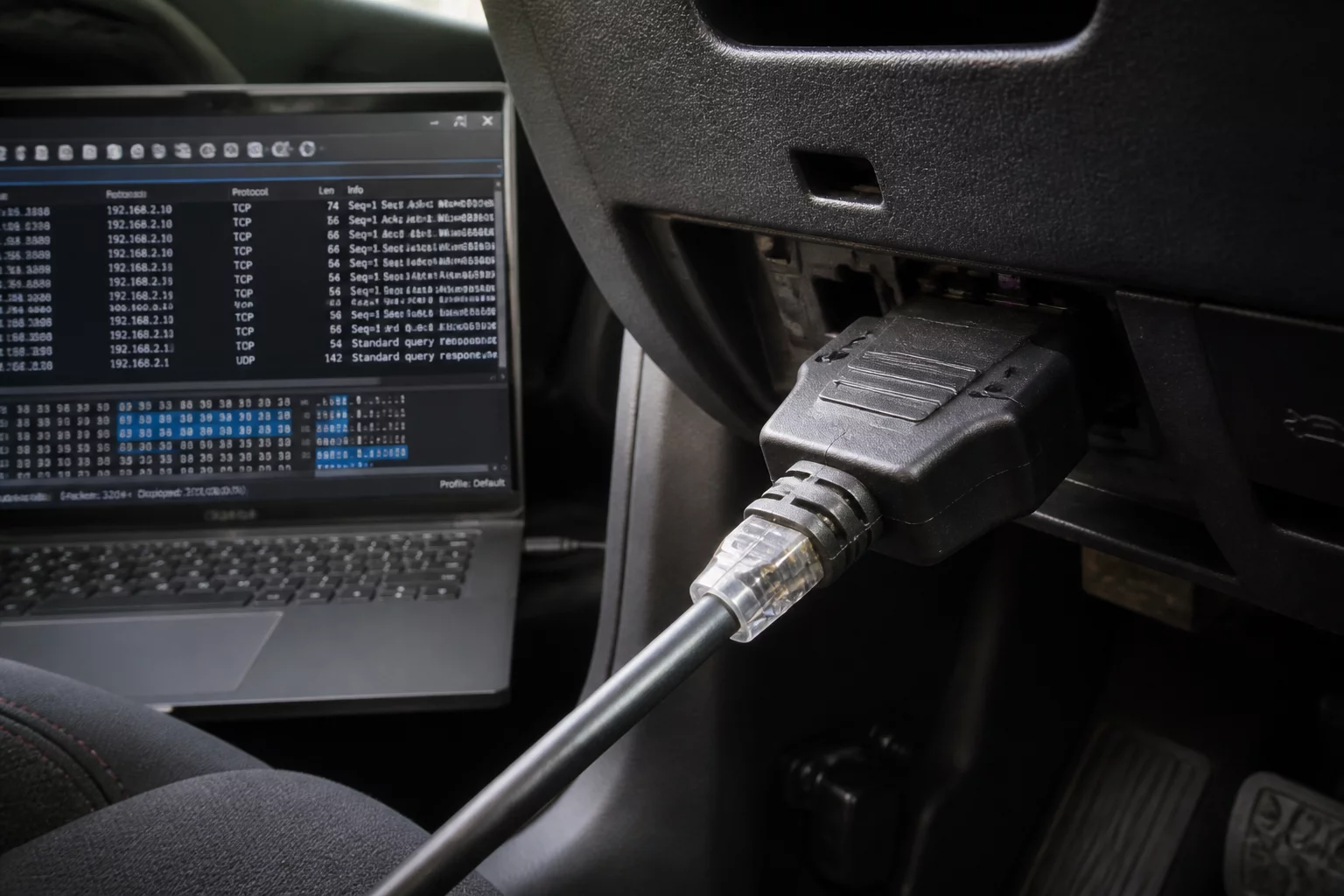
Diagnostic over Internet Protocol (DoIP), standardized under ISO 13400, traditionally depends on dedicated Vehicle Communication Interface (VCI) hardware boxes to bridge tester client software with target electronic control modules. TestBot's newly published experimental study introduces an architectural framework that simulates the entire transport and session layers directly across host network sockets, bypassing external interface dongles entirely.
By virtualizing the physical Ethernet transceiver and routing activation handlers in software, automotive software engineering teams can execute high-volume diagnostic verification without bench wiring harness limitations. This transition enables parallelized CI/CD test automation for software-defined vehicles (SDVs), allowing hundreds of virtualized ECU nodes to undergo automated regression sweeps simultaneously.
Socket-Level ISO 13400 Implementation and Stack Parity
The technical paper demonstrates full protocol parity between traditional physical hardware setups and socket-level emulation. TestBot verified header consistency, routing activation requests, alive-check mechanisms, and ISO 14229-1 (UDS) message transfers over encrypted TLS 1.3 tunnels, confirming zero protocol drift across simulated AUTOSAR Classic and Adaptive runtime instances.
Key Findings and Methodological Breakthroughs
TestBot evaluated three benchmark scenarios comparing traditional physical VCI hardware against socket-level virtualization across high-density multi-node test environments:
-
01
Packet Throughput & Latency Jitter:
Virtualized software pipelines achieved a median round-trip latency of 0.32 ms compared to 4.8 ms over physical USB/Ethernet VCI adapters, eliminating interface queue saturation during high-frequency telemetry logging.
-
02
ISO 13400-2 Protocol Conformance:
The software-defined stack passed all mandatory test suites for vehicle identification discovery (VID), entity status queries, and dynamic routing activation without requiring physical link pulse generation.
-
03
Multi-Client Session Concurrency:
Benchmarking demonstrated linear scaling up to 64 concurrent diagnostic client connections on a single host, whereas standard hardware multiplexers showed packet drops when exceeding 8 concurrent sessions.
-
04
Containerized CI/CD Integration:
Headless containerization allows entire vehicle diagnostic suites to execute inside standard continuous integration runners, reducing the reliance on dedicated physical hardware test rigs by over 70%.
In conclusion, TestBot's findings confirm that hardware-free DoIP testing provides identical validation rigor to benchtop hardware while radically expanding test coverage, test velocity, and cloud test portability.
Peer Discussion & Technical Notes
No comments yet. Be the first to share a technical note or observation.
Leave a Peer Technical Comment