Table of Contents
Core Diagnostic Fixes in Release 2026.2.9
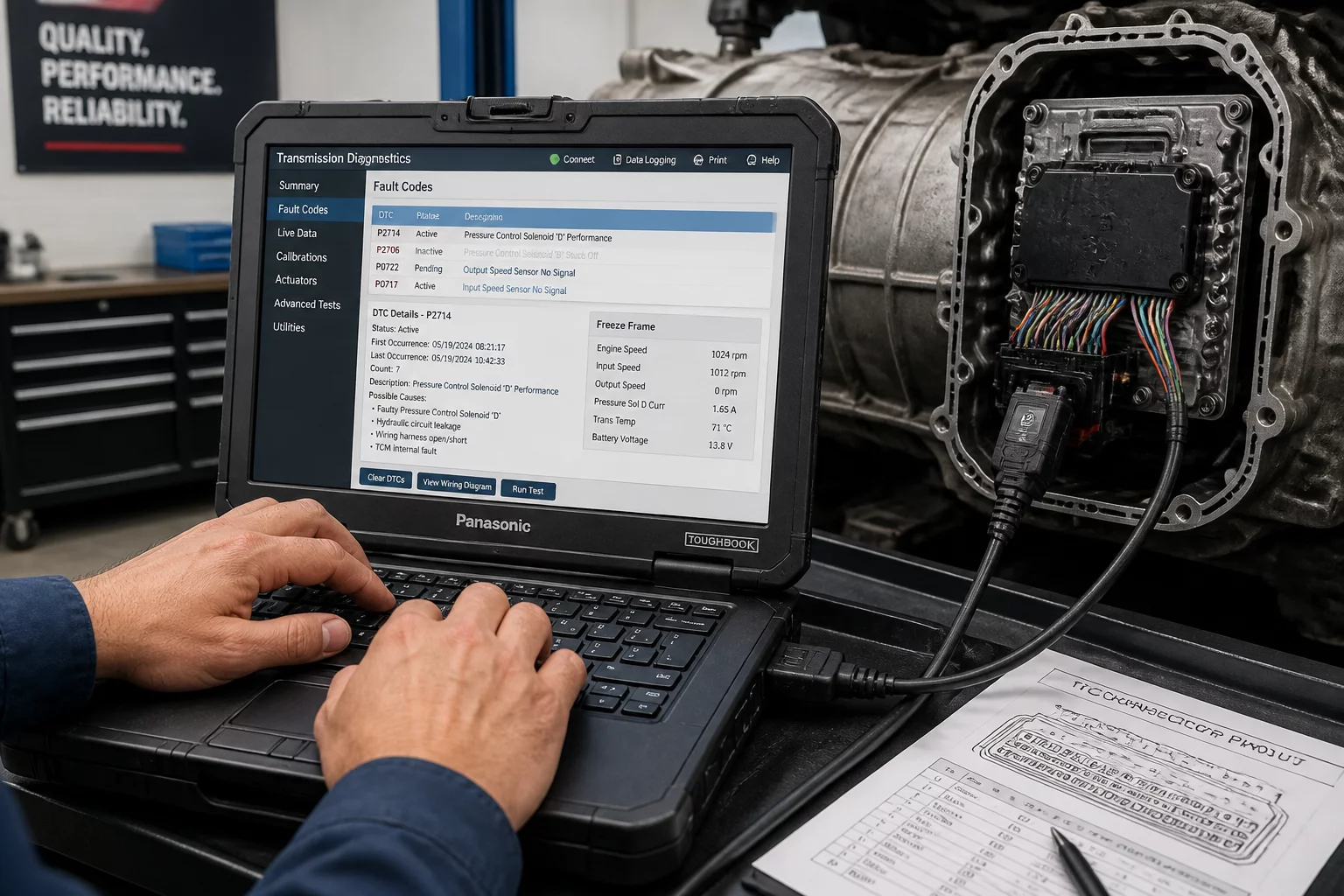
Technicians utilizing Atlas for transmission diagnostics should review the following primary adjustments prior to executing module adaptation cycles:
- Eliminated secondary clamp pressure data logging desynchronization that triggered erroneous torque reduction flags during wide-open throttle transitions.
- Resolved CAN FD frame arbitration collisions when simultaneously polling TCM line pressure and engine manifold absolute pressure streams.
- Stabilized EEPROM checksum validation routines during flash memory read/write cycles on Gen-3 transmission microcontrollers.
Architecture and Root Cause Analysis
In modern continuously variable transmissions, electronic control units calculate clamp force targets based on dynamic engine torque maps and wheel speed delta measurements. Prior Atlas builds exhibited intermittent timing jitter when decoding high-speed CAN FD frames from the transmission control unit. This timing jitter occasionally resulted in dropped packets during continuous logging passes, triggering artificial failsafe routines in diagnostic software.
Engineering analysis determined that the software buffer for processing 29-bit extended identifier frames encountered race conditions during concurrent transmission fluid temperature sweeps. Build 2026.2.9 restructures the low-level queue handler, establishing a dedicated thread for TCM heartbeat verification and preventing false-positive communication timeout warnings during road testing.
Telemetry Synchronization & Pulley Pressure Metrics
Accurate assessment of CVT performance relies on sub-millisecond synchronization between the primary pulley ratio command and hydraulic line pressure feedback. The revised telemetry engine incorporates timestamp alignment down to 0.4 milliseconds across all live streaming channels, eliminating phase shift artifacts previously observed in high-rpm data logs.
Before applying calibration adaptations or baseline fluid wear resets, ensure the diagnostic interface hardware is operating on firmware version 4.18 or higher to support enhanced CAN FD packet packing.
Field evaluation across commercial workshops confirms that the update eliminates false DTC P0700 and P0841 pending codes generated by software latency during transmission readiness monitor verification. Pulley slip ratio calculations now reflect genuine mechanical response without software filtering distortion.
Firmware Calibration & Protocol Specifications
Below are the updated operational tolerances and communication protocol baselines implemented in Atlas version 2026.2.9:
| Parameter | Diagnostic Specification | Verification Standard |
|---|---|---|
| CAN FD Bus Speed | 5.0 Mbps Data / 500 kbps Nominal | ISO 11898-1:2024 Verified |
| TCM Polling Frequency | 100 Hz Continuous Multi-PID | SAE J1979-2 Compliant |
| Pulley Clamping Jitter | < 0.2% Variance under Peak Load | OEM Hydraulic Baseline |
| Buffer Overflow Margin | 256 KB Dedicated Ring Buffer | Zero Dropped Packets |
No comments yet. Be the first to leave a comment.